Designing movement and place for a more connected Sydney
May 25, 2026
Sydney’s growth is being shaped by projects that prioritise people, place and cultural identity alongside transport performance. Across the city, active transport is increasingly recognised not simply as a mobility layer, but as a catalyst for greener corridors, stronger community connection and a richer everyday urban experience.
From Western Sydney’s major transport infrastructure to some of the city’s most culturally significant streets, CONTEXT is working to ensure that movement and place are conceived together. Through projects such as the recent M7M12 Integration Project and Parramatta Light Rail, the transformation of Oxford Street East, and emerging local movement networks such as the Arncliffe and Banksia to Riverine Park Pedestrian and Cycle Links, we are contributing to a transport future where active movement supports equity, climate resilience and meaningful connections between communities.
These projects demonstrate that active transport in Sydney is not only about cycling. It is about creating inclusive, comfortable and legible environments that support walking, wheeling and everyday movement, while strengthening connections between neighbourhoods, centres and the places that define the city. When designed well, these networks provide more than access. They enable communities to move safely and confidently through green corridors and connected routes that support wellbeing, cultural identity and a stronger experience of place.
Why Active Transport Matters for Sydney Now
Across Sydney, walking and cycling are playing an increasingly important role in connecting people to jobs, education, culture and nature. Active transport supports public health, reduces congestion and contributes directly to climate resilience and urban cooling.
For Sydney’s culturally diverse population, these networks are also critical enablers of independence and inclusion. Designing for shade, safety, comfort and universal access allows people of all ages and abilities to move confidently through their city, regardless of whether they own or can use a car.
At its core, active transport is an issue of equity. Well-designed networks provide access to opportunity and experience, allowing communities to move along green corridors and connected routes that strengthen wellbeing, cultural identity and the human experience of place.
From Policy to Pavement: Turning Guidance into Groundwork
NSW has a strong policy foundation to guide the planning and delivery of active transport. Key frameworks include:
NSW Movement and Place Framework (TfNSW), recognising roads as places, not just corridors
Cycleway Design Toolbox (TfNSW), designing for cycling and micromobility
Connecting with Country (GANSW), embedding Country-centred design processes
NSW Active Transport Strategy (TfNSW), prioritising walking and cycling within transport networks
Better Placed (GANSW), setting holistic expectations for inclusive and responsive design
Policy alone, however, does not deliver outcomes. The challenge lies in translating strategic intent into projects that work on the ground. This requires early integration, collaboration across disciplines and genuine engagement with communities.
In practice, this means designing for:
Universal access across all ages and abilities
Destinations, not just routes
Layered uses including play, rest, markets, exercise and cultural activity
Ecological integration that supports biodiversity, shade, stormwater management and long-term climate performance
Safety and legibility at complex movement interfaces, particularly where walking and cycling connections intersect with high-traffic corridors, crash hotspots and public transport stops
These principles underpin CONTEXT’s work across Sydney, whether revitalising historic high streets, embedding landscape within new transport infrastructure or shaping shared paths that strengthen local identity and belonging.
Oxford Street East: Setting a Place-Led Framework for Active Movement
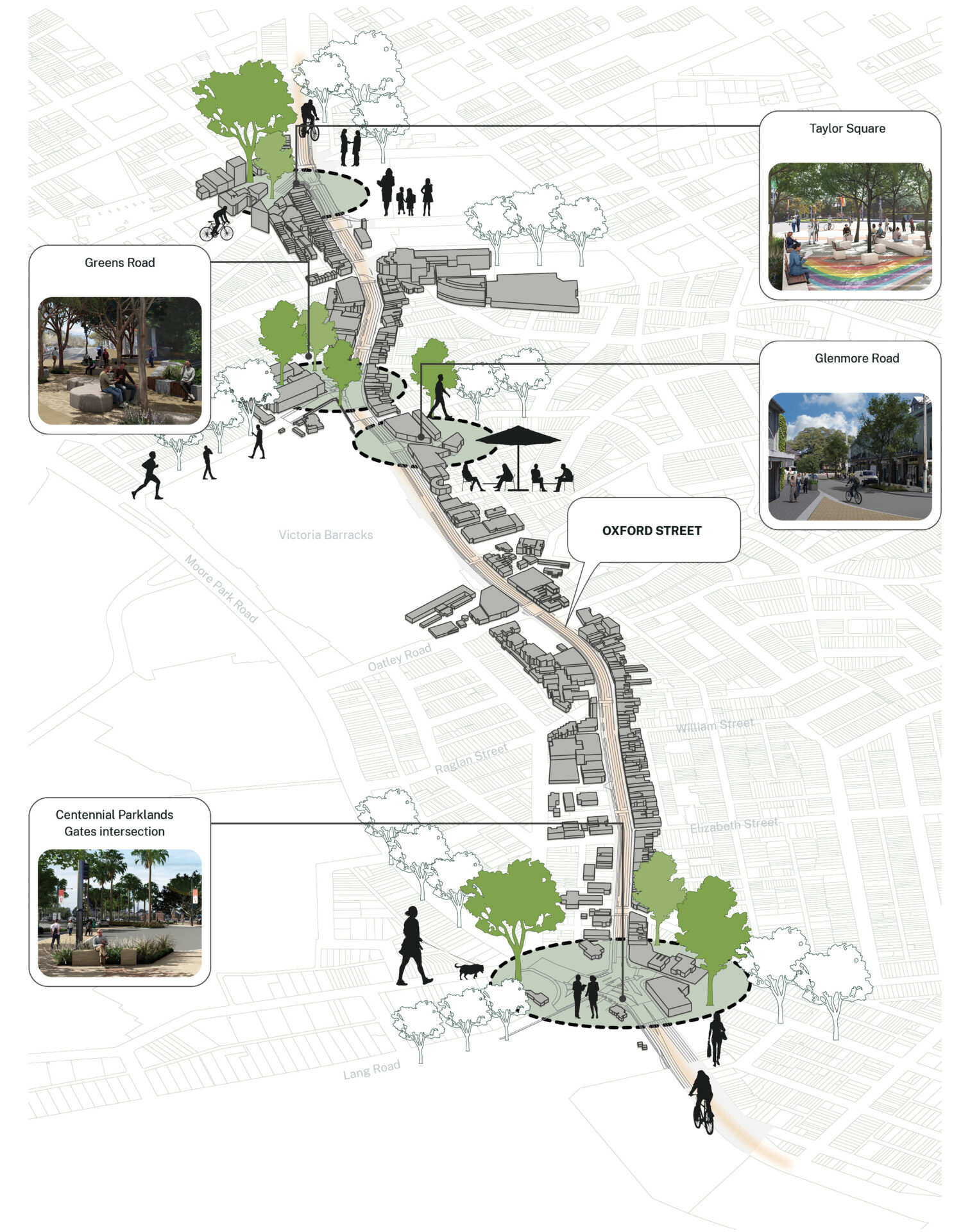
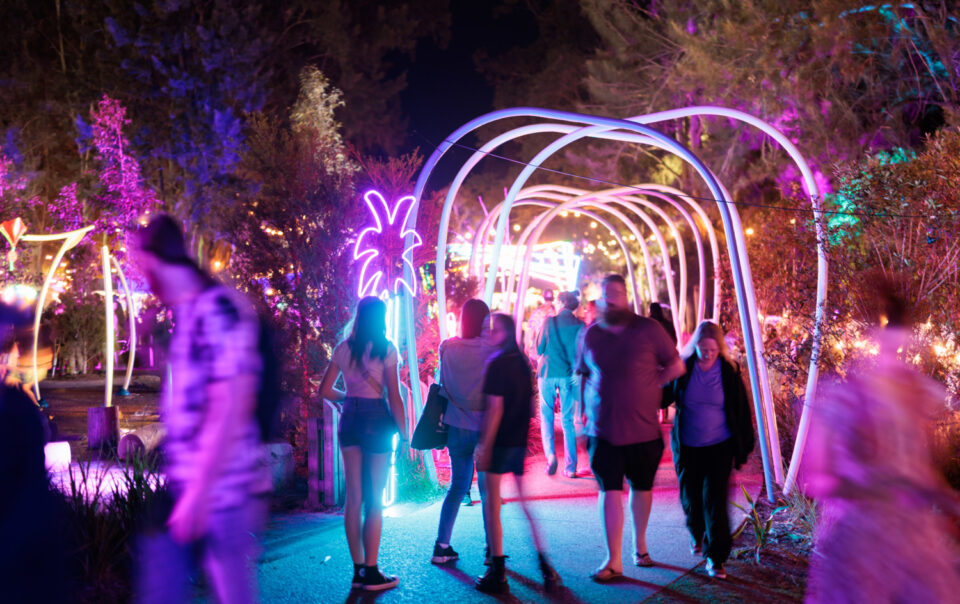
CONTEXT’s work with TfNSW on the recently approved Oxford Street Revitalisation Project Public Domain and Activation Strategy demonstrates the power of early, place-led thinking to reimagine one of Sydney’s most culturally significant corridors.
Rather than focusing solely on movement, the strategy positions the street as a vibrant civic spine shaped by people, culture and everyday life. Grounded in a deep understanding of the qualities of place, it takes a site-specific approach to the public domain, responding to the street’s layered identity and fine-grain character. This is expressed through a more generous and inclusive public realm, where coordinated improvements to the pedestrian environment, urban landscape and public domain elements work together to support both local character and economic vitality.
At its core, the strategy recognises that active movement is not just about getting from A to B. It is about creating streets that invite people to linger, connect and participate. By embedding these principles from the outset, the project sets the conditions for Oxford Street to evolve as a people-first destination, one that celebrates its identity and continues to reflect the diversity and energy of Sydney.
Parramatta Light Rail Stage 1: Connecting the Central City
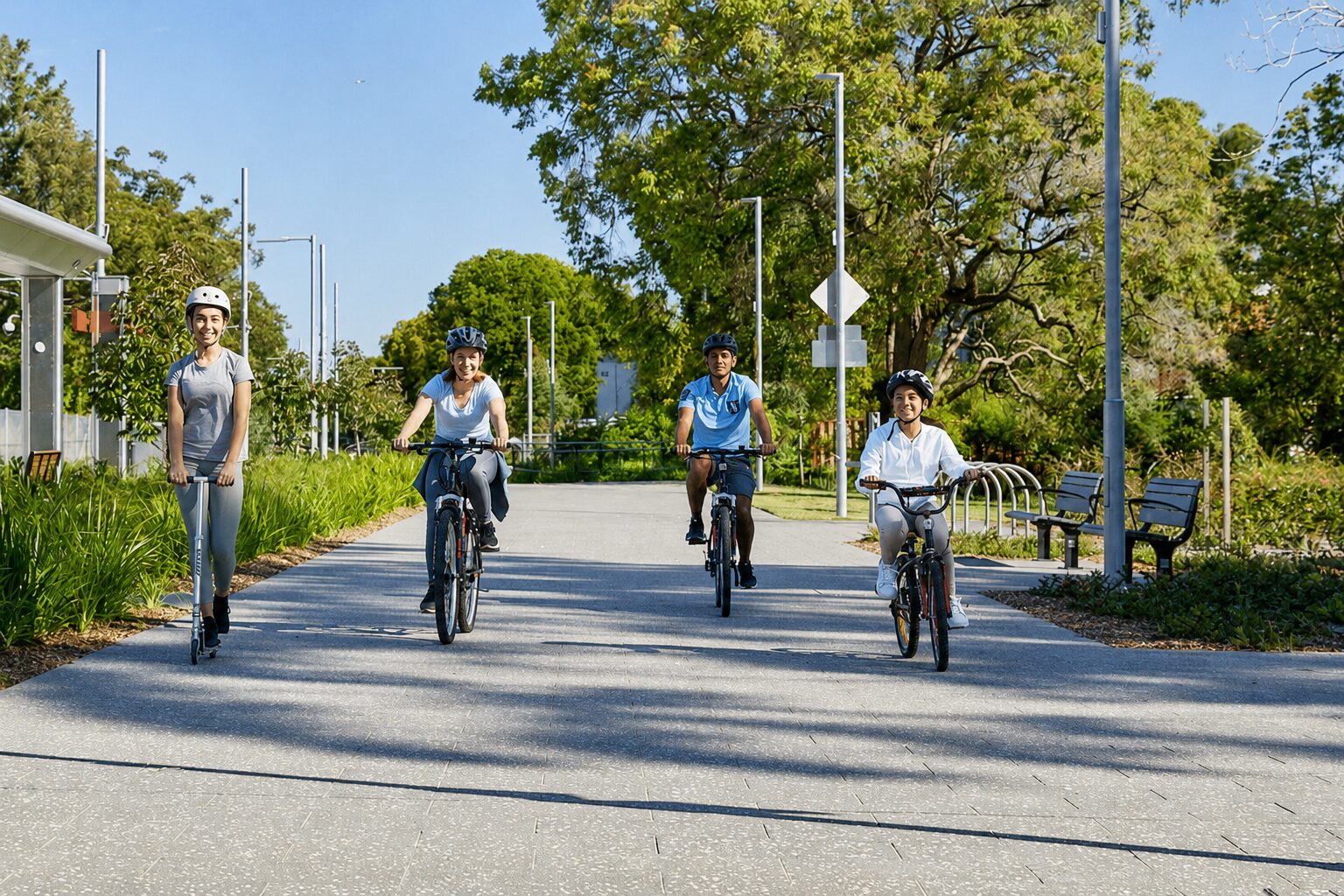
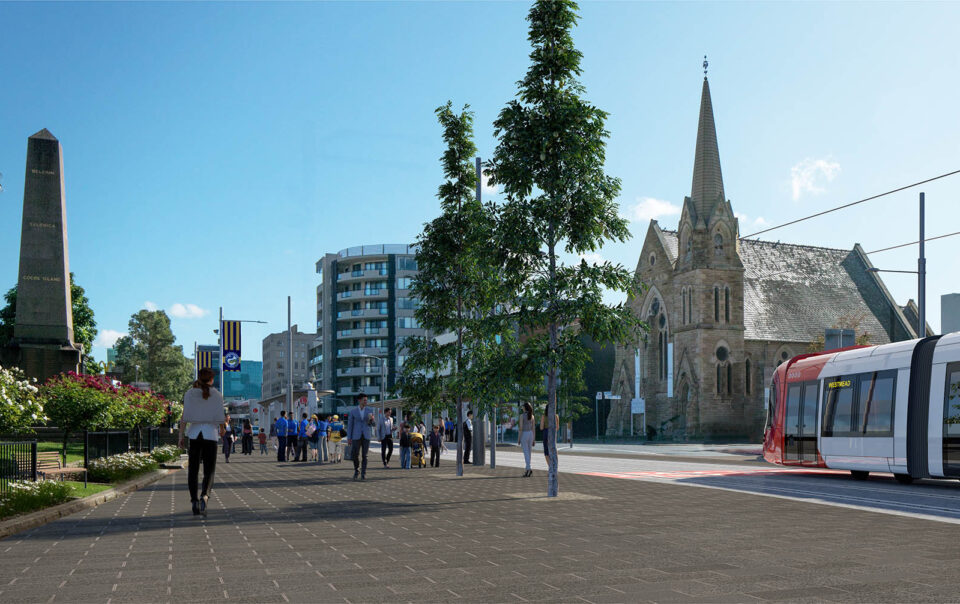
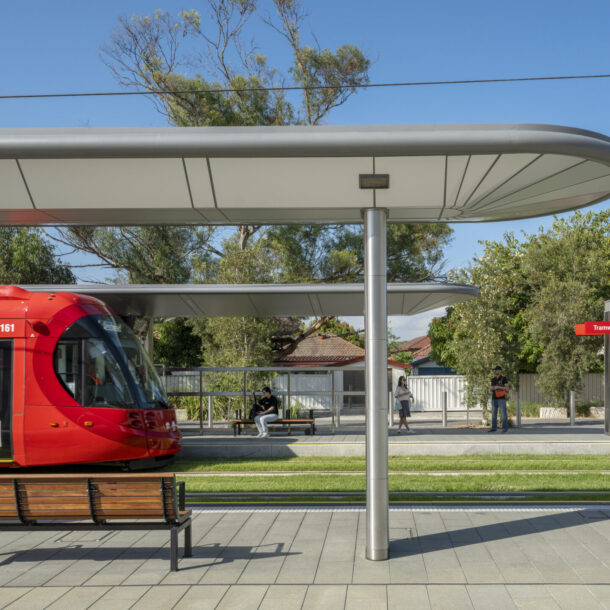
Parramatta Light Rail Stage 1 has reshaped movement through the Central River City, linking key destinations while delivering new public spaces and improved pedestrian and cycling networks.
The project integrates planting, shade, heritage interpretation and safe connections to Parramatta Square, Westmead and surrounding neighbourhoods. Beyond transport efficiency, the corridor creates places for gathering, movement and celebration, reinforcing Parramatta’s identity as a connected, people-centred city.
M7M12: Pathways to Country and Community Connection
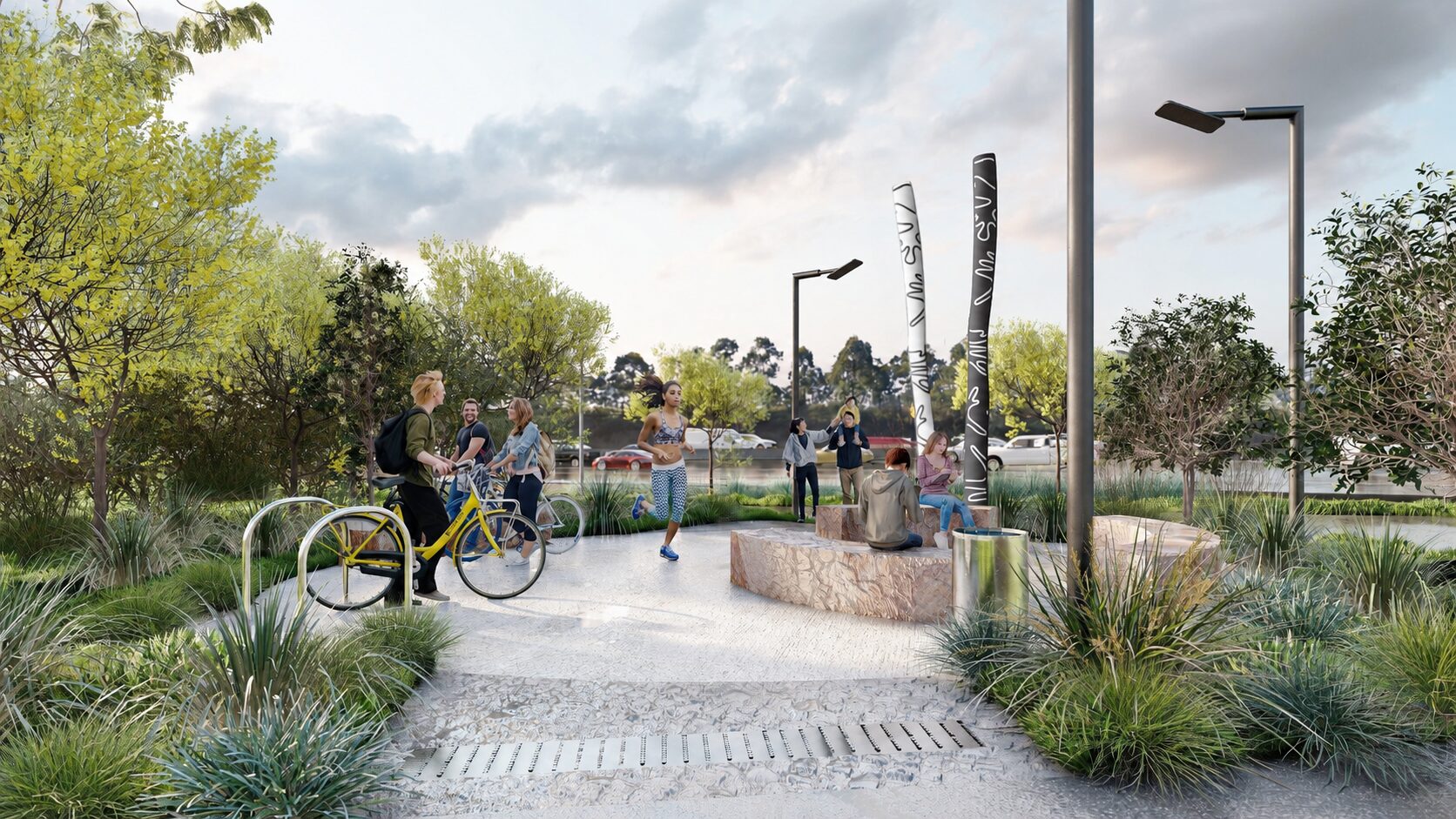
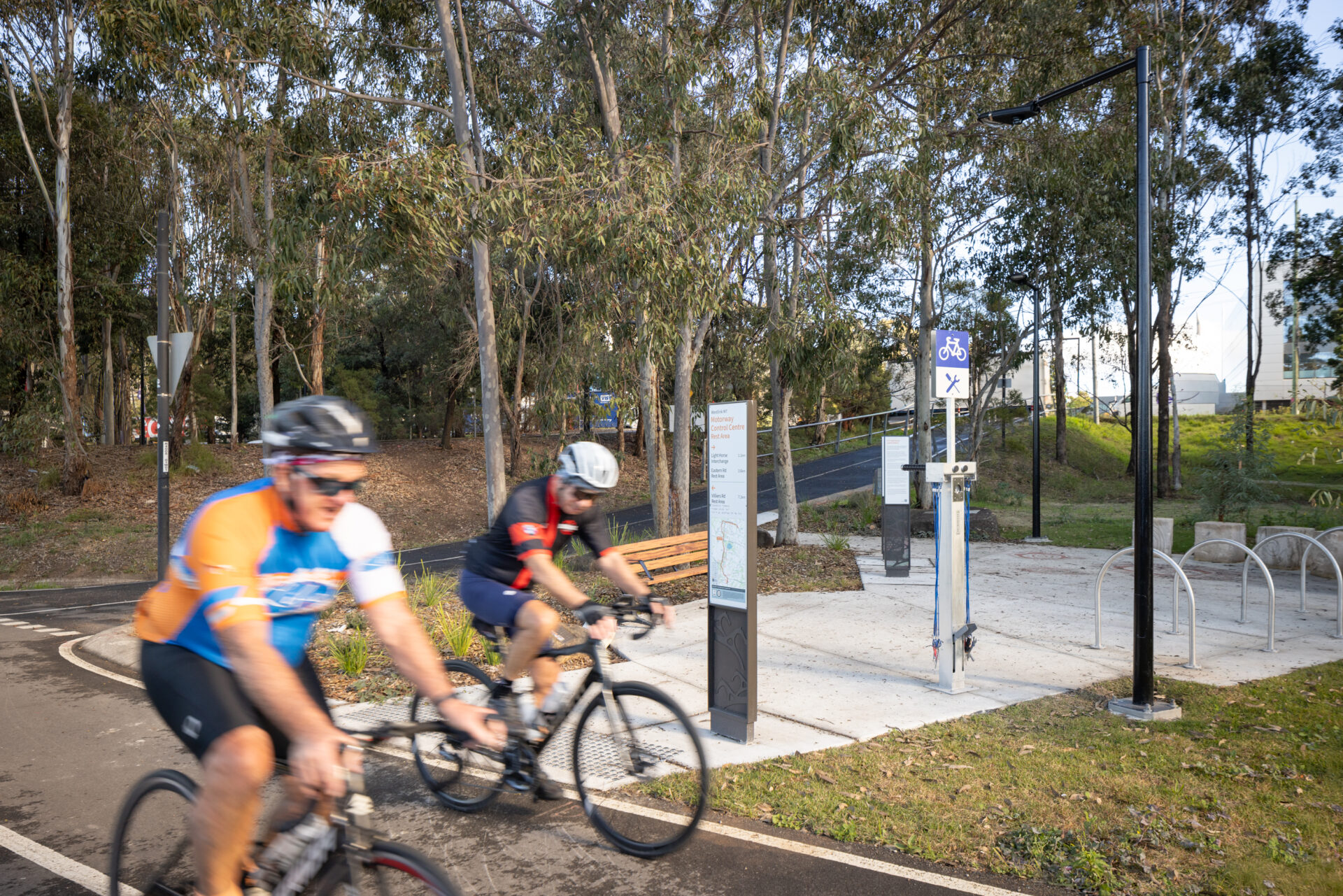
The M7M12 Integration Project shows how large-scale infrastructure can embed cultural identity, green infrastructure and inclusive access. Working alongside John Holland, SCP, Balarinji and the Traditional Owners of Dharug Country, CONTEXT designed a network of rest areas along the M7 Shared User Path, one of Western Sydney’s most significant active transport corridors.
Guided by the theme ‘To Protect Country is to Belong’, the project integrates Indigenous storytelling, Country-centred thinking and Cumberland Plain planting. The rest areas function not only as places of pause and comfort, but as cultural touchpoints that deepen connection to Country. In doing so, the corridor becomes more than a path. It becomes a journey that supports movement, learning and belonging.
Arncliffe and Banksia to Riverine Park: Local Links, Strategic Impact
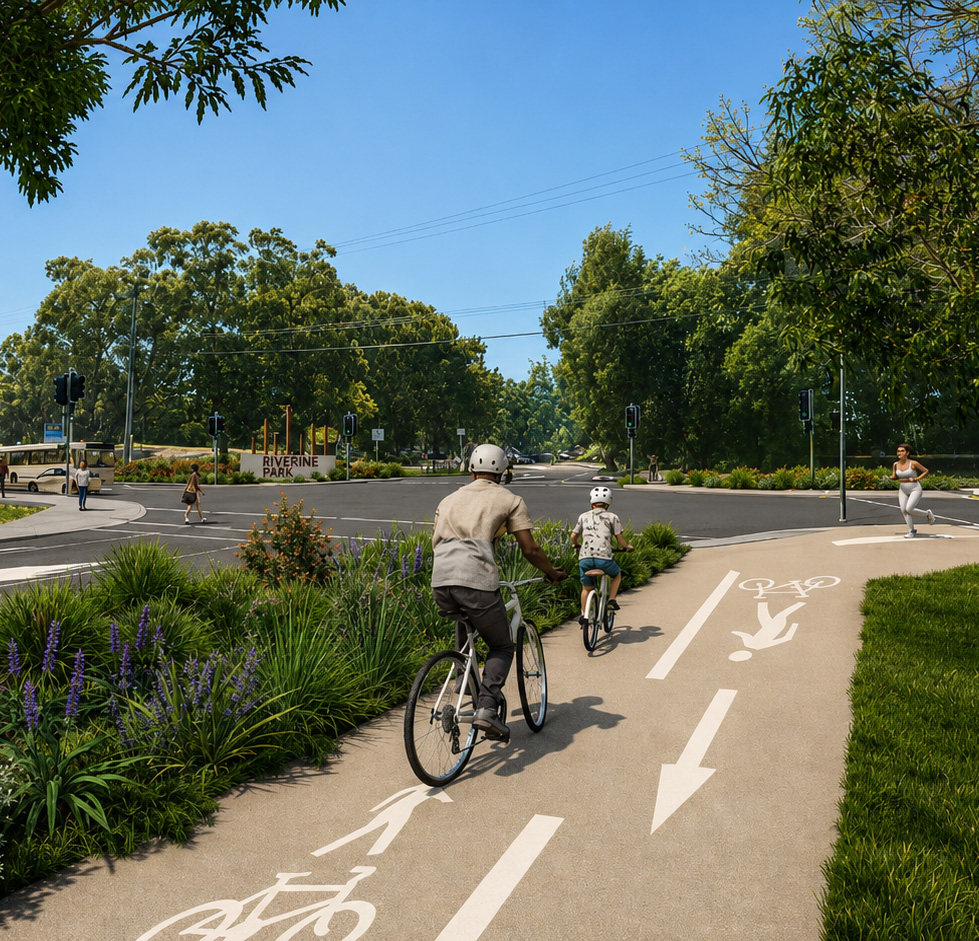
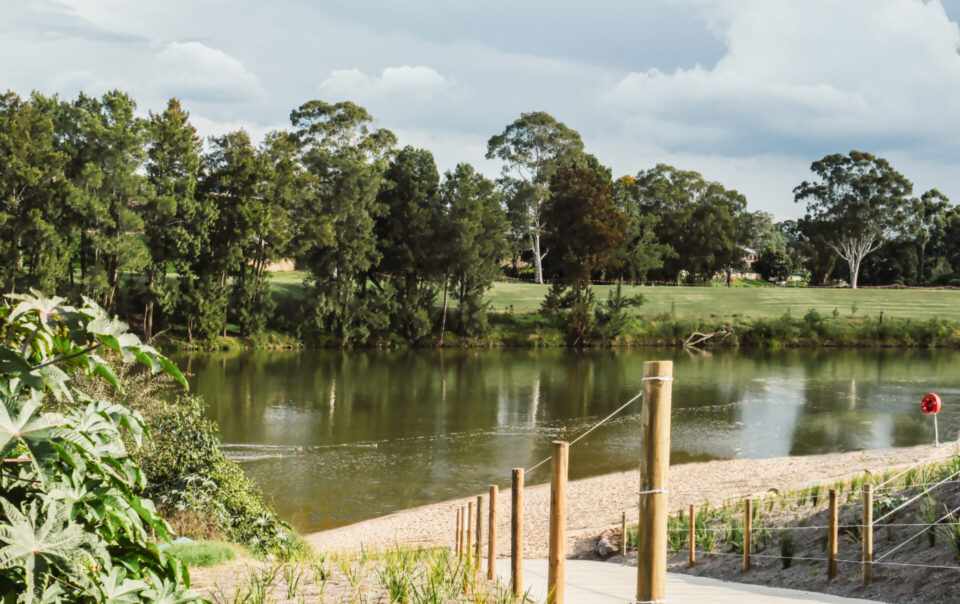
The Arncliffe and Banksia to Riverine Park Pedestrian and Cycle Links project demonstrates how local active transport interventions can deliver broader strategic benefits. With Spring Street, Arncliffe identified as a key Green Connector within the Bayside Priority Green Grid Corridors Spatial Framework, the project strengthens east-west connections between communities west of the Princes Highway and the recreational amenity of Barton Park and Riverine Park, while supporting walking and cycling as practical, healthy and sustainable alternatives to private vehicle use.
The project also integrates safety, access and place outcomes at critical movement interfaces, including proposed connections at West Botany Street and the Princes Highway where recognised crash hotspots exist. Through the Riverine Park TCS and Shared Path Connection works, the project improves intersection safety, separates vehicle, cyclist and pedestrian movements, strengthens links to Arncliffe Station and the West Botany Road bus stop, and contributes to Bayside Council’s broader 30-minute access vision.
Designing Sydney’s Future
There is growing recognition that active transport is not a single-purpose solution. It is climate action. It is public health infrastructure. It is cultural recognition and economic empowerment. Above all, it is a design challenge that demands leadership across planning, policy and delivery.
Designing for active transport requires a shift from a movement-focused mindset to a place-led approach. The question is not only how people move, but what draws them, supports them and connects them along the way. Streets and corridors must function as civic spaces, where identity, comfort and experience are valued alongside efficiency.
Across Oxford Street East, Parramatta Light Rail Stage 1, the M7M12 Integration Project and the Arncliffe and Banksia to Riverine Park Pedestrian and Cycle Links, CONTEXT shares a consistent ambition: to transform movement routes into meaningful public places.
As CONTEXT continues its work across Sydney, from major transport corridors to riverfront destinations, suburban parks and new movement networks, we advocate for design that does more. Design that cools the city and restores ecosystems. Design that honours Country. Design that builds equity and strengthens belonging.
So, let’s keep walking. Let’s keep cycling. Let’s keep designing.
Because the most important journeys in Sydney will not be measured in kilometres, but in connection, culture and community.